
Many of you know that I recently returned from a trip spent with the Missionaries of Christ’s Charity sisters in Viet Nam. My sense of duty was my own self-created obstacle, but my soul needed it! I was hesitant at first because of so many things that were still on my plate, but I knew I needed to step away… but much more important, God knew I needed to step away to focus on what gives me life! It was a long and tiring trip, but it was also a much-needed opportunity for spiritual nourishment and revitalization. Even though we had a packed schedule every day of the trip, I felt rejuvenated because I got to pray with the sisters multiple times a day and get to take care of the poor, which are the two priorities that I am very passionate about as a priest.
The sisters shared with me that the Archbishop of Saigon approached them two years ago, before their general chapter, to have a dialogue about their current ministries, challenges, and to offer some insights on their future discernment. Already knowing their commitment to the poor, he asked them, “Sisters, who are the poor for you at this moment in time?”
Instead of receiving his question with negativity, they embraced it as an invitation from the Holy Spirit! Knowing that they are already stretched and challenged in many different ways in taking care of orphans, young mothers with unexpected pregnancies, and the elderly destitute, yet they never rejected the Archbishop‘s thought-provoking invitation to discern new ways to serve the poor. As a matter of fact, they shared with me that he challenged them to not look too far but see the number of poor migrants and indigenous people who are displaced and living on very little means in bigger towns and cities, looking for new opportunities. He even said to look for the poor in unexpected, or even familiar, places that are close to them, too!
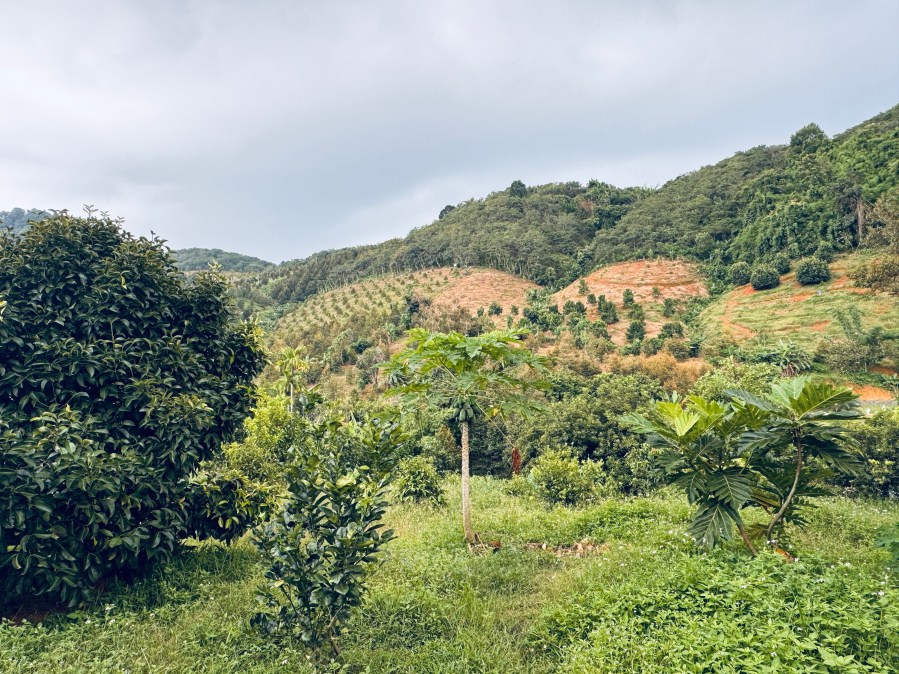
Thus, the sisters took the invitation and discerned a new path together. Following St. Mother Teresa‘s own approach and methodology, then quickly responded by sending a group of sisters into the central highland areas. They quickly gathered enough money to buy a piece of land and began to plant fruit trees and cultivate them (to have a source of income from selling them to local vendors). They went out to different indigenous areas to be present with the locals. They collaborated with a local parish to assist low-income families and those who are struggling to put food on the table. Simply put, they did not take the traditional route of organizational planning or military logistics, but just quickly chose to be present, work hard, and allow God to use their simplicity to minister and serve people.
They also began to seek out people who migrated to the Saigon surrounding areas with very poor living conditions. They responded with enthusiasm by asking around where people were settling and setting up shanty towns alongside river runoffs or bodies of water. They found people who can sponsor a monthly food drop-off for the poor. They encouraged those who are Catholics to return to the faith, and even offered to come to catechize or teach the children (who are often forced to stop going to school to work in the field in order to provide for their families). Again, they did not wait for an institutionalized or organizationally sound plan to begin; they simply began with the simplicity of service and being present to people who are often abandoned, forgotten, ignored, and living on the very fringes of our society.
 So, I would like to extend a similar question to you now… Who are your neighbors at this moment? Perhaps the neighbors that you and I are called to love, care, and serve might not be the “typical” ones that we immediately identified, liked, or thought to be in our minds. Perhaps those neighbors might be the ones that we are discriminating against, avoiding, or think are not deserving of our love. It might be the undocumented, convicted, outcasted, or people who are shunned by society. Our neighbors can be both socially poor and spiritually impoverished. Our neighbors and our shared human poverty come in different people, cultures, backgrounds, struggles, and walks of life. Therefore, we must ask ourselves who the neighbors we are called to love and serve at this moment!
As a matter of fact, we are invited by the Church to seek, understand, and lovingly serve our neighbors as brothers and sisters in Christ — beyond legalistic, political, social, or ideological definitions. We are called to see their identity and dignity in Him instead of what the world or society might want us to think about them! Therefore, the question begs us to reflect and dig deeper to see our brothers and sisters for who they truly are: created in God‘s image and likeness, redeemed and saved, loved and lovingly guided by Him to the final destination. We are called not to be politically, legally, socially, or ideologically motivated or myopic in our humanistic approach, but to see our neighbors as they are through God‘s own eyes.
That was why the good Lord used the Parable of the Good Samaritan (cf. Luke 10:25-37) to answer the scholar of the law who wished to justify himself. The scholar did nothing wrong according to the law… he met all of them and able to check off the list… however, his heart was not in the right place and he wished to only justify himself. Therefore, the great Teacher challenged him to see as God sees by using an example that was beyond his legalistic, culturally restrictive, and petty understanding. He stretched the scholar to humbly accept that a true neighbor is the one who treats everyone with loving mercy. The one who is merciful is the one who is able to have a tender heart to feel and understand the hurts, pains, sufferings, and struggles of others and choose to care for them. Thus, that was why He ended the conversation by telling the scholar of the law to go and do likewise!
Therefore, we must ask ourselves if we treat one another with dignity and respect, with mercy and understanding… or are we still full of ourselves and our humanistic approach that we only care to justify, glorify, or think about what is beneficial for us?!? Just as the Archbishop who asked the sisters to find and serve the poor in new ways… Just as the Lord asked the scholar of the law to be a neighbor to those who are different than him in ways… We are also called to discern and respond in new ways to seek, love, and serve those who are around us through the eyes of God and accompany them with His love. So, let us ask ourselves: Who are the poor for you? Who are our neighbors?
 I Thirst (John 19:28) with Father Khoi
You must be logged in to post a comment.